Toyota Production System
Our unique approach to manufacturing to eliminate waste, create value, and empower people.
Built-in Quality
TPS Jidoka
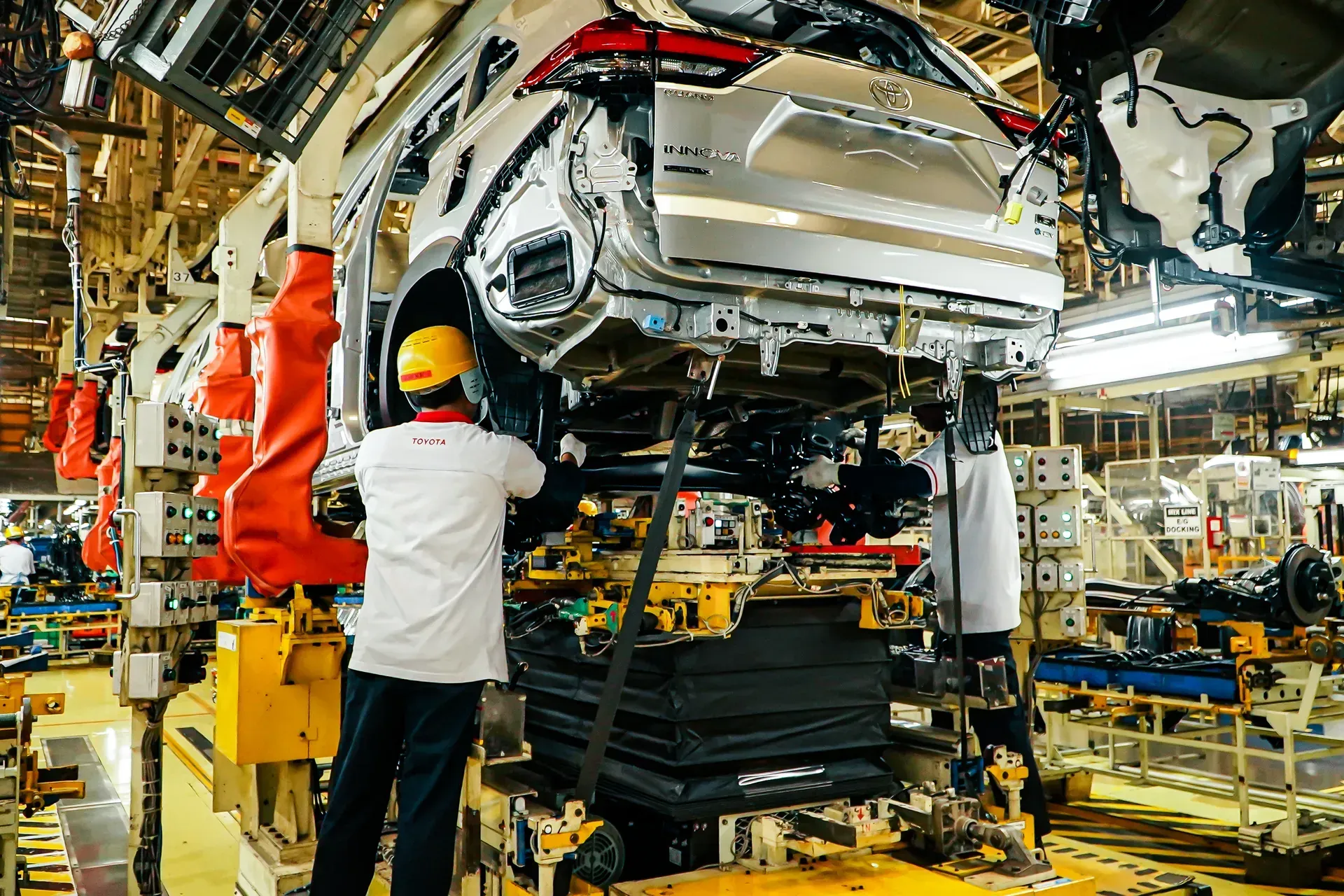
Jidoka detects abnormalities early, stops the process to protect quality, and helps teams find and fix root causes. Each lesson strengthens the standard and keeps improvement moving forward.
01
Detect abnormalities
02
Stop the process
03
Identify the root cause
04
Improve with Kaizen
05
Standardize the improvement
Kaizen · Repeat and improve
Quality + Continuous Improvement
Every problem is an opportunity to improve the process.
Once an issue is resolved, what the team learns becomes a stronger standard. This cycle continues, driving ongoing improvements in quality.
Right Part, Right Time, Right Amount
Just In Time
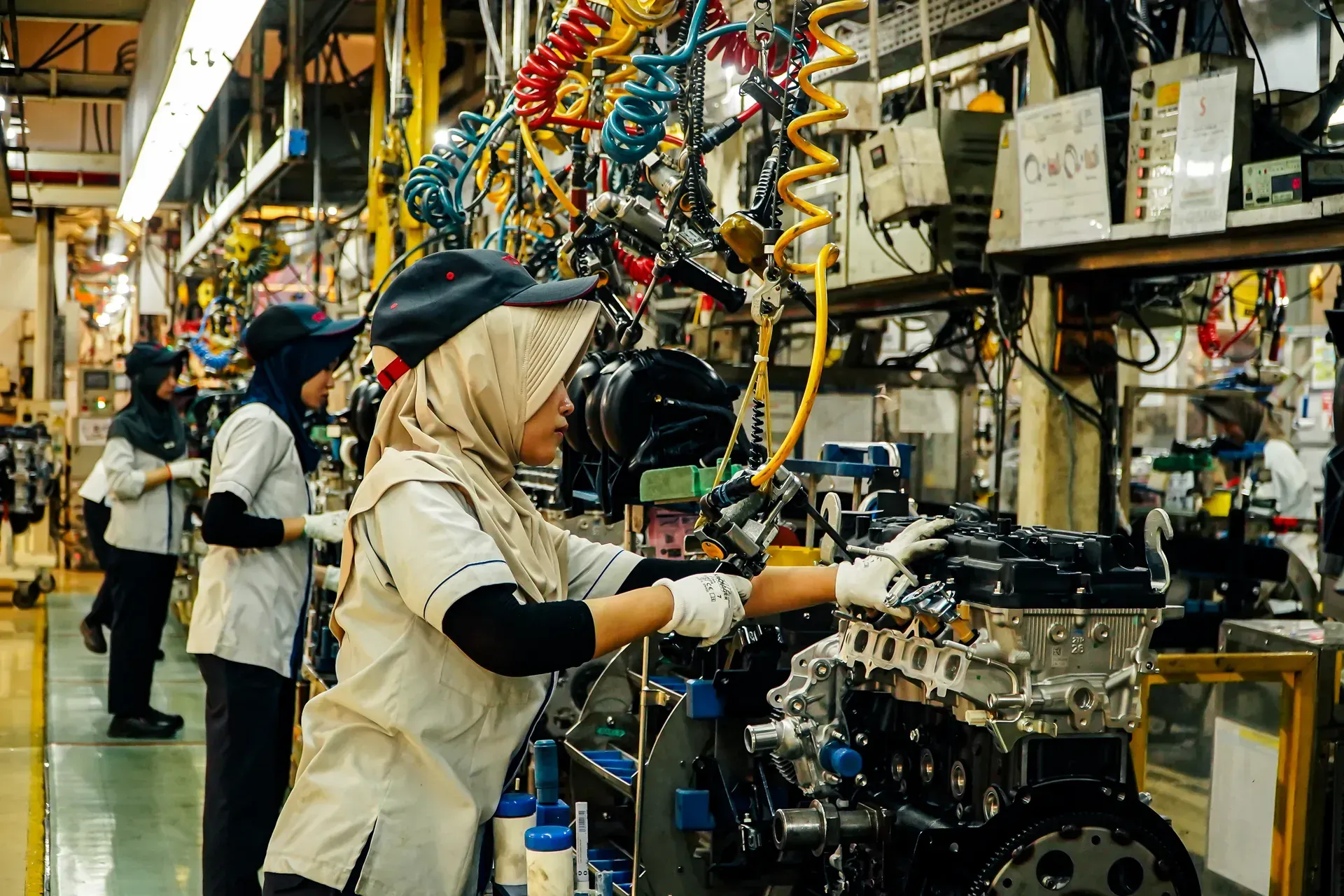
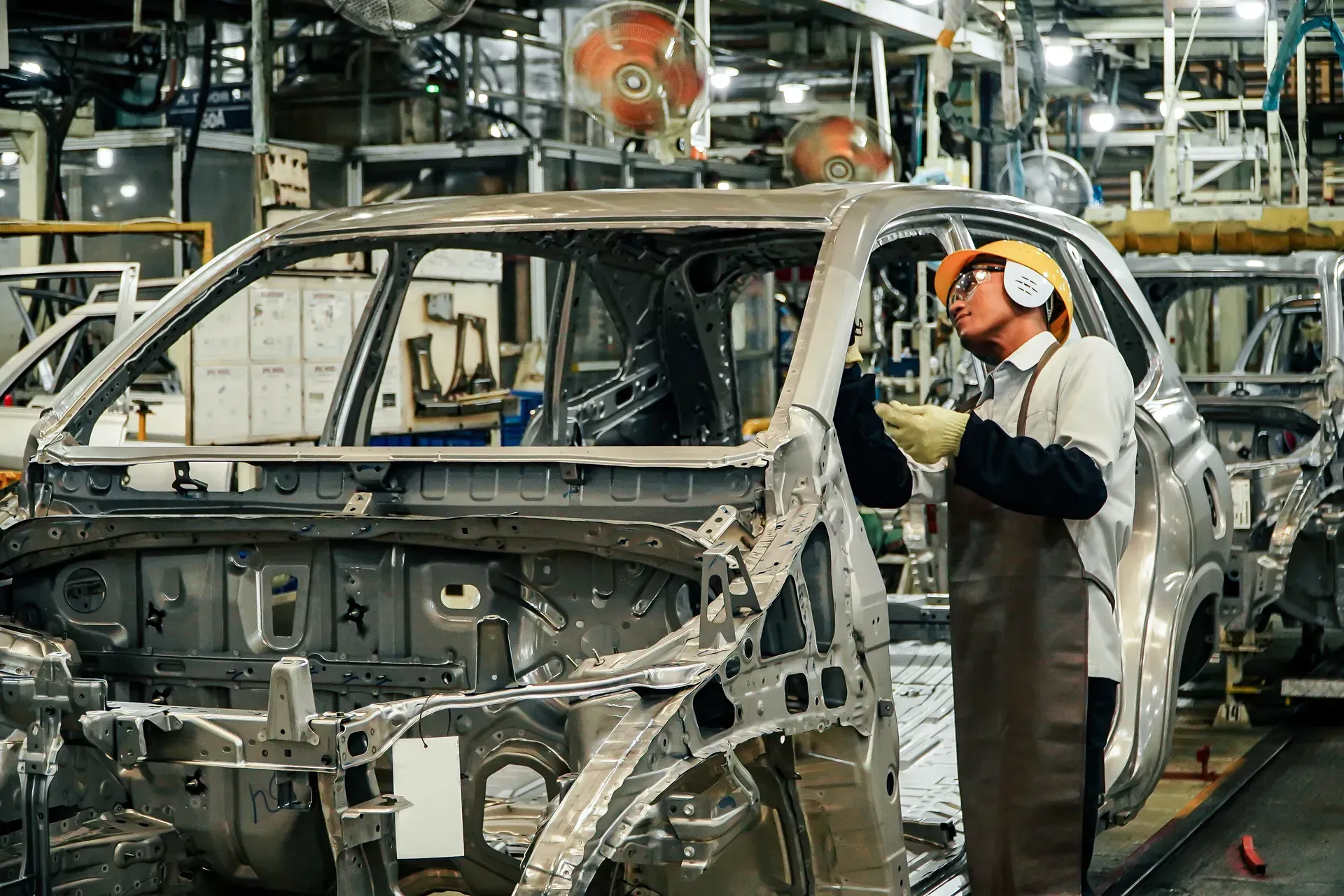
At the heart of every Toyota vehicle is a production system built on quality, efficiency, and respect for people. Just in Time is a production approach to produce and deliver only what is needed, when it is needed, and in the quantity needed. This reduces inventory, shortens lead time, and improves responsiveness, creating a more efficient and flexible production system.
A Legacy of Continuous Improvement
Origin of TPS
The Toyota Production System was developed from the vision and efforts of Toyota’s founders, building on their belief in eliminating waste, respecting people, and continuous improvement. Over time, it has evolved into a global model for manufacturing excellence.
1867–1930
The early foundations
Sakichi Toyoda (1867–1930)
Toyota Power Loom equipped with a new weft-breakage automatic stopping device (developed in 1896). This machine become the world’s first automatic loom with a non-stop shuttle-change motion, the Type-G Toyoda Automatic Loom (developed in 1924).
1894–1952
Entering the automotive industry
Kiichiro Toyoda (1894–1952)
Drawing on his experience of introducing a flow production method using a chain conveyor into the assembly line of a textile plant (completed in 1927) with a monthly production capacity of 300 units. Kiichiro Toyoda also introduced this method into the body production line at Toyota Motor Co., Ltd’s Koromo Plant (present day Honsha Plant), completed in 1938.
1936
Early passenger-car production
Type-G Automatic assembly line.
Sakichi Toyoda’s inventions and commitment to making useful products laid the foundations for Toyota’s approach to production.
1950s
Finding better ways to produce
Toyota Standard Sedan Model AA announced in 1936.
Sakichi Toyoda’s inventions and commitment to making useful products laid the foundations for Toyota’s approach to production.
1950s–1970s
The Toyota Production System takes shape
Eiji Toyoda (1913–2013)
By ensuring thorough implementation of Jidoka and the Just-in-Time method, Eiji Toyoda increased workers’ productivity by adding value and realized the Toyota Production System, which enabled Toyota to compete head-on with companies in Europe and the U.S.
1980s–present
An evolving system
Taiichi Ohno (1912–1990)
With strong backing from Eiji Toyoda, Taiichi Ohno helped establish the Toyota Production System and built the foundation for the Toyota spirit of "Making Things" by creating the basic framework for the Just-in-Time method.
People Make It Stronger
TPS Jishuken
- Ji
- 自
- Build-in Quality
- Shu
- 主
- Self-Directed Continuous Improvement
- Ken
- 研
- Hands-on & Scientific Approach
Jishuken comes from Japanese and means self-directed investigation. Through this approach, every individual is encouraged to identify problems, analyze their causes, and make improvements on their own. Within the Toyota Production System, Jishuken is part of continuous skill development and quality improvement. It is practiced not only within Toyota, but also together with suppliers to build better production processes.